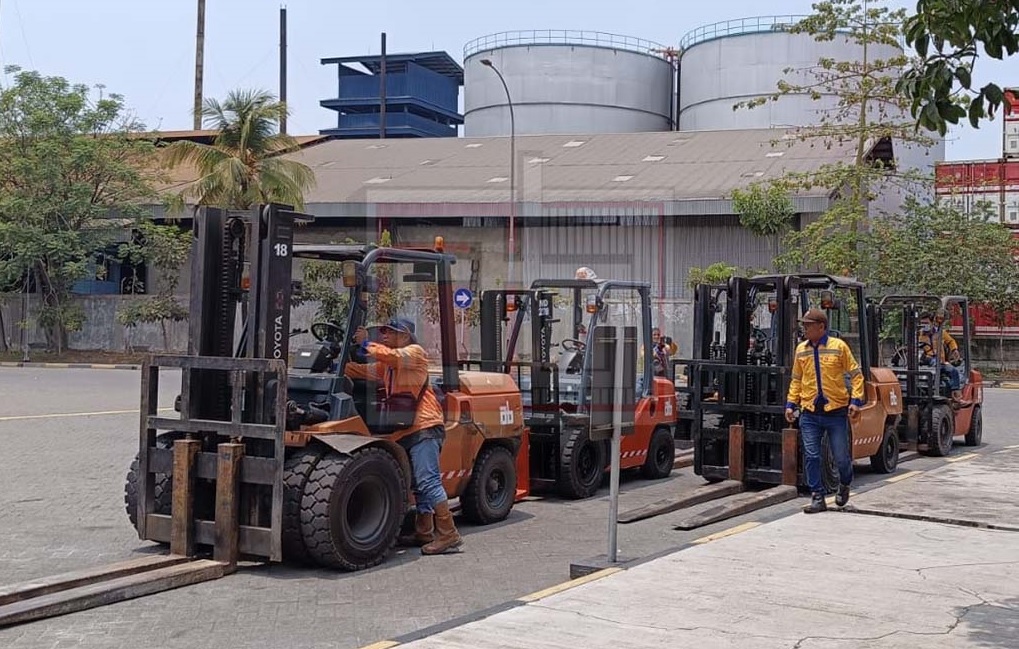

Load weight is not the only information needed
Forklift selection often starts with how many tonnes need to be lifted. That question matters, but it is incomplete. Load shape, pallet dimensions, centre of gravity, placement height, and attachments also determine whether a configuration is suitable.
Prepare examples of everyday loads and the most demanding loads. Do not rely only on standard pallet dimensions if the warehouse also handles machinery, rolls, or irregular goods. Photographs and dimensions help the forklift rental provider understand the actual requirement.
Understand capacity and load centre
A forklift data plate states capacity for specified conditions. Load centre relates to the position of the load's centre relative to the forks. Nominal capacity therefore cannot be applied without considering the load conditions. Mast and attachment information must also match the machine in use.
Toyota describes the data plate as a reference for truck capability. Use the actual plate and manual, and seek assessment by competent personnel when loads or attachments differ. Do not determine safe capacity from an estimated tonnage or a simple formula found online.
Measure routes and placement heights
The forklift must be able to pick up, carry, and place goods along the available route. Measure aisle widths, turning space, doorways, and overhead obstructions. Include rack heights and the dimensions of openings where goods will be placed.
For work inside a container or under a low roof, check the lowered mast height and clearance needed as the forks move. When loading vehicles, check elevation differences and available facilities. Assess site information together with load information, not after the machine arrives.
Match the power source to operating conditions
Enclosed warehouses and open yards may have different requirements. When comparing electric and internal-combustion forklifts, discuss ventilation, site policies, noise, working schedules, and energy availability. Do not assume one configuration suits every area.
For electric machines, plan charging facilities and time according to equipment requirements. For engine-powered machines, ensure their use is appropriate to the area. The provider needs to know whether a machine moves indoors and outdoors during one shift. These details help establish the machine type and work arrangements.
An example warehouse requirements checklist
Suppose a warehouse handles standard pallets alongside some long goods. Describe these as separate tasks in the rental request. Long goods cannot automatically be handled at the same capacity as ordinary pallets, even if they weigh less.
Use the following list to prepare a quotation request, then confirm technical details with the provider and operations representative.
- Weights, dimensions, and photographs of regular and special loads.
- Rack heights, door sizes, aisle widths, and surface conditions.
- Number of shifts, working hours, and operator requirements.
- Required attachments and the corresponding data plate.
- Handover procedures, initial inspections, and fault reporting.
Conclusion
For forklift rental in Surabaya or material handling elsewhere, provide load and working-route information together. Discuss material handling services with Arthalaut; capacity, configuration, and availability must be confirmed against the job. Operations must follow site procedures and equipment limits.