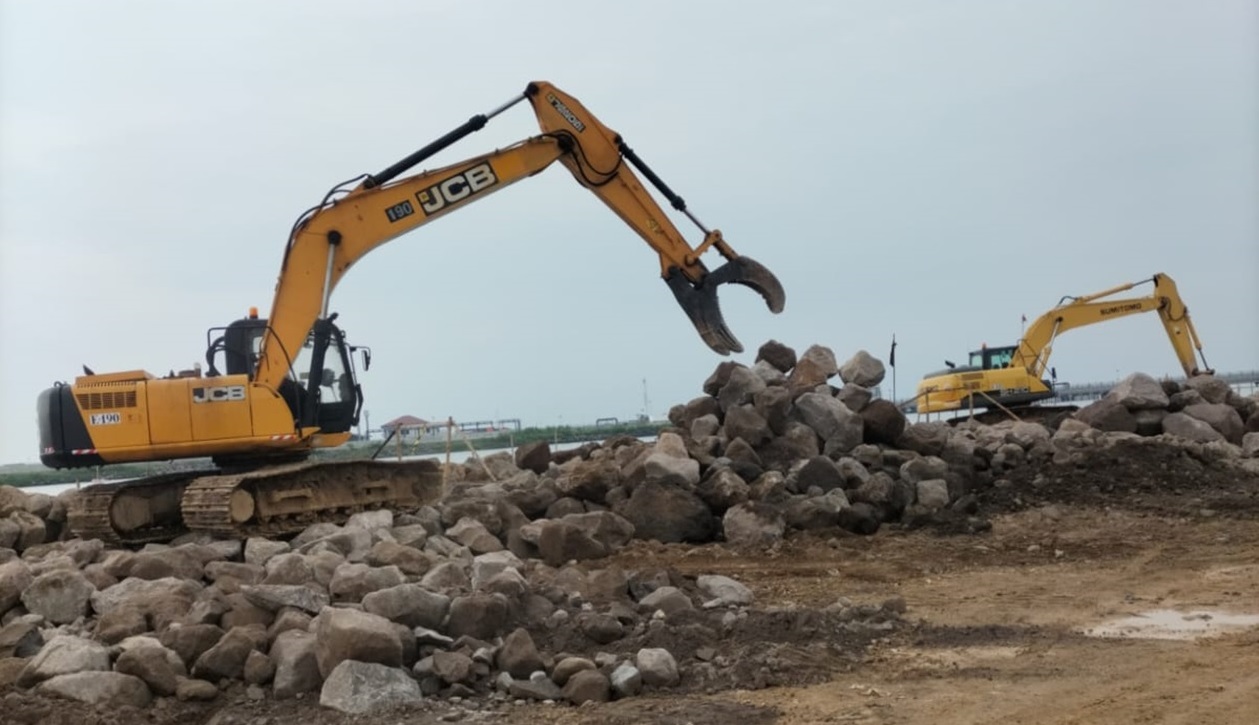
Two machines with different working patterns
Wheel loaders and excavators can both be seen loading material into vehicles. Selection, however, should account for the work before and after loading. Does material need to be excavated first, collected from a stockpile, or moved repeatedly within the site?
These questions help determine wheel loader or excavator rental according to function and material flow. Neither machine is always faster or cheaper on every project. Assess the work completed, not simply whether a machine appears busy.
When excavation is the main requirement
An excavator uses its boom, arm, and bucket to reach the work area from the machine's position. For channels or ground formation, working-range and digging-depth diagrams are important. Select buckets and attachments according to material and task.
Plan where excavated material will go. If it must be loaded into trucks, discuss vehicle positions and access for replacement trucks. Choosing excavation equipment without deciding how material leaves the work point may simply shift the problem to loading.
When stockpile handling is the main requirement
A wheel loader is often considered for collecting loose material from stockpiles and loading it while moving between points within the site. Caterpillar describes wheel loader applications in material handling. The bucket must still be checked for suitability to the material.
Arrange stockpiles, travel routes, and receiving vehicles as one workflow. Unsuitable surfaces or routes that cross other activities can reduce the benefit of machine mobility. Equipment selection should be accompanied by site layout planning to keep the loading route clear.
Compare against project requirements
Use the following table for an initial discussion. Final selection still requires machine specifications and a site assessment.
| Requirement | Questions for an excavator | Questions for a wheel loader |
|---|---|---|
| Excavating soil | Are depth and reach suitable? | Is the task actually collecting loose material? |
| Loading trucks | Where are the excavation and truck body positioned? | What is the route from stockpile to loading point? |
| Moving between points | How often will the machine change position? | Are the route and surface suitable? |
| Different materials | Which bucket or attachment is needed? | Does the bucket suit the material characteristics? |
Combined equipment needs clearly defined roles
During site preparation, an excavator may handle digging while stockpile handling follows a separate workflow. Adding a wheel loader makes sense when it has a clear task. Avoid a second machine queuing at the same point without improving material flow.
Sketch the excavation, stockpiles, and vehicle routes. Mark the work sequence and waiting spaces. Compare a single-machine scenario with a combined fleet by work output, usage duration, and mobilisation. Also establish who coordinates moves between areas so operators and the provider can learn about plan changes promptly.
Conclusion
Use excavators and wheel loaders according to the dominant task and material flow. If the choice is unclear, send the Arthalaut team the work description, material characteristics, and a site sketch through its heavy equipment services. This supports equipment discussions before agreeing on quotations and schedules.