
Tonnage class is the starting point
Excavators are available in different tonnage classes, and the right class depends on the work, site access, maneuverability, and project conditions. The classes in this guide are general planning categories, not exact manufacturer specifications.
This article explains the differences as a basis for project equipment selection, not as a lifting-capacity chart. A model number does not state the load that may be lifted. For lifting work, use the manufacturer's charts for the relevant configuration and operating conditions.
Compare the class with actual unit data
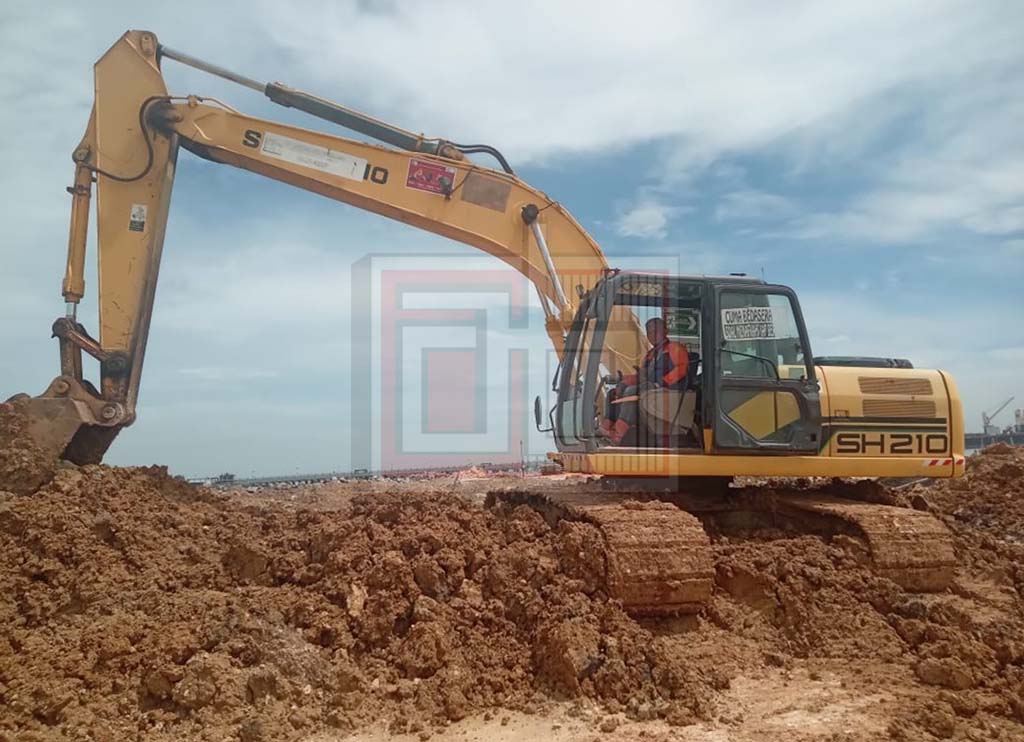
On site, these model names are often used to distinguish size options. For procurement, prepare a comparison sheet for the actual machines offered. Do not assume every 20-ton has the same operating weight or bucket capacity.
Komatsu's catalogue lists models separately with operating-weight and bucket-capacity parameters. The tonnage-class brochure brochure also identifies equipment included in the weight calculation. Read these specification notes alongside the headline figures.
| Excavator class | General characteristics | Information to request |
|---|---|---|
| 5-ton | Restricted access and manoeuvring space | Full model code, machine width, swing radius, and working range |
| 10-ton | Excavation requirements and available space | Series/year, transport dimensions, bucket, and working-range diagram |
| 20-ton | Loading targets and supporting equipment | Operating weight, boom-arm configuration, bucket, and truck flow |
| 30-ton | Site and transport readiness for a larger option | Complete configuration, dimensions, supporting ground, and haulage plan |
Operating weight is not bucket capacity
Operating weight describes a machine's weight in a particular configuration. Bucket capacity is its nominal volume, not automatically the weight of material it can lift. Materials have different characteristics, so volume alone does not establish the load.
Check that units and definitions match across quotations. Record whether attachments are included. If a 10-ton document does not clearly identify its series or origin, request the manual or specification sheet for that machine. Do not substitute data from a similarly named model.
Screen options against the actual work
For a narrow passage, begin with dimensions that can fit through the access. For digging, examine depth and reach. For loading, check truck-body height and vehicle position. Once these basic requirements are met, compare work-cycle and logistics plans.
A larger machine may not speed up the job if access is unprepared or the haulage fleet is unbalanced. Conversely, an easily transported machine may need frequent repositioning if its reach is unsuitable. A site sketch makes these trade-offs clearer before selection.
Checks when accepting a substitute model
If the proposed machine differs from the original request, assess the replacement against the same work. Approval should follow the site team's review of its specifications and logistical implications.
- Photographs of the model plate and machine identification to confirm the series.
- Transport dimensions and weight with the attachments being delivered.
- Working-range diagrams and bucket or attachment details.
- Operator availability, technical support, and mobilisation dates.
Conclusion
Differences between 5-ton and 30-ton options must be translated into suitability for the task, not simply a sequence of numbers. Use data for the machine that will actually be rented. Discuss the work and access through Arthalaut's heavy equipment services; model availability and specifications still require confirmation.