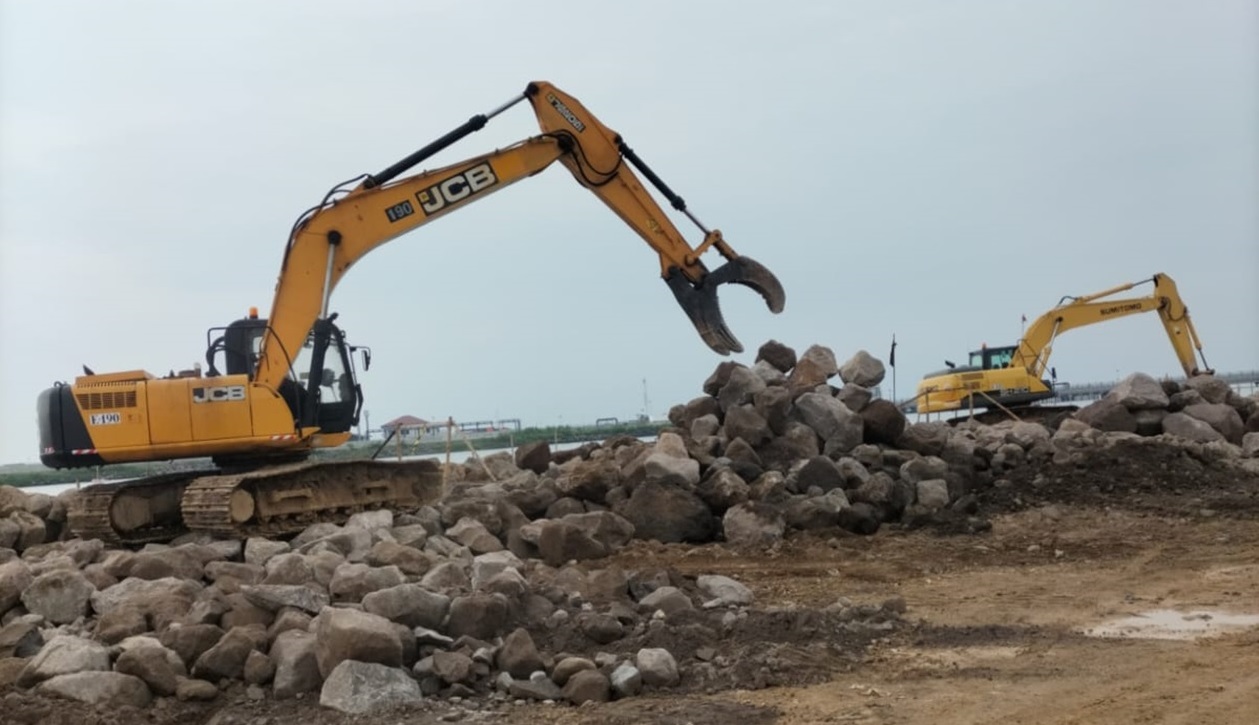
Start with the work, not the model number
Choosing an excavator should begin with the required result: digging a drainage channel, shaping ground levels, clearing a site, or loading material into trucks. Two projects covering the same area may need different configurations because their excavation depths, ground conditions, and transport arrangements differ.
Prepare a one-page work brief before requesting a quotation. Include the location, material, estimated quantity, required depth or reach, and when the area will be ready. This is more useful than requesting a model without explaining its intended work.
Check access and working space
The machine must be able to reach the work area, slew, and load material without disrupting other activities. Review the unloading point, internal roads, slewing clearance, and truck waiting areas. Measure the clearance actually available rather than relying solely on road widths shown on a drawing.
For drainage work between buildings, manoeuvring space may be the main constraint. On an open earthworks site, truck flow and spoil storage may matter more. Discuss these differences with the project team before choosing the excavator size.
- Record access width and height, including overhead structures or cables.
- Mark utilities, excavation edges, soft ground, and pedestrian and vehicle routes.
- Choose an equipment unloading point that will not obstruct subsequent work.
Match the bucket and attachments to the task
A bucket used to load loose material may not suit digging denser material. If the job requires a breaker, grapple, or another attachment, check its mounting arrangement, weight, and hydraulic requirements against the machine.
An attachment name alone does not establish compatibility. Request technical confirmation for the configuration to be delivered. Allow time for attachment changes, especially when tasks change several times a day. Komatsu distinguishes attachment options by application; each machine and attachment combination still requires a specification check.
Assess productivity across the whole workflow
Bucket capacity is only one factor in output. Truck waiting time, loading positions, disposal access, and moves between work areas can leave a large machine idle. Compare the equipment plan with the haulage fleet and site programme.
For channel excavation, reach and material placement may matter more than choosing the largest bucket. When loading in an open area, ensure trucks can enter and leave smoothly so the loading point does not become a queue. A simple sketch of machine and vehicle positions helps the team discuss this workflow.
Request quotations on a comparable basis
Request comparable scopes covering duration, working hours, operator, fuel, mobilisation, and technical support. Confirm how hours will be recorded and who will coordinate on site. Evaluate price differences alongside differences in service rather than as isolated figures.
Confirm model, attachment, and schedule availability for each order. The final selection must reflect site assessment and machine specifications, including manufacturer operating limits. Do not base work on estimated reach or lifting capacity.
Conclusion
The right excavator suits the task, can access the site, and works effectively with supporting equipment. Send the Arthalaut team a work brief and access photographs to discuss excavator rental and mobilisation requirements more precisely.